Reflect on your process for designing the mechanics for your game.
Using resources available for tutorials were a huge help along with Professor Oprean. Going along with resources, there were so many that it was hard to find what would be helpful and what was not applicable to my game. I spent a lot of time looking through resources that I didn’t even end up using.
If I had to do this process over again, I wish I knew for 100% sure what my game setup was going to be for the interaction. Knowing that would have saved me a lot of time, instead of jumping around looking at different ideas.
What did you learn from the Construct 3 implementation aspect of the project?
The only previous game design that I have had thus far was in this same class. This game has a lot of differences from a physical board game for obvious reasons, but a lot that leads up to creating the games are similar. The platform used to create our narrative game was a lot more user friendly.
Digital Game Details:
Mindful Mindy
Subject area: Stress management, life skills
Knowledge domain: Apply and analyze
Learning objective
Learners will be able to apply stress management techniques in stress inducing scenarios
Learners will be able to analyze which stress management techniques will work best for the scenario, if not multiple, and complete them in the correct order.
Game goal: The player will learn different stress management techniques, and put them into practice throughout the game. The hope would be that the player would use those strategies in their own life when needed.
Core dynamic: Solution and Escape
Mechanics: The player will move Mindy around, and follow directions on how to properly complete the stress management technique.
Assessment, scoring, reward
When met with stressful situations, the player will use certain keys on the keyboard to successfully complete the stress induced scenario, for example a pop quiz. At the start, the quiz will be blurred and if you complete the keys successfully the stress levels will drop making it so that the player will then be able see the quiz to take it. If not completed successfully, the player will have to try again. For scoring, the player will only be able to move forward in the game if they successfully complete the stress management technique. For reward, as the game progresses, the player will learn new stress management techniques that are more comprehensive. They will also have instant reward throughout the game by feeling the effects of stress management techniques (box breathing, etc).
Describe your idea briefly including the following:
What is the core loop you want players to experience in your game?
Play the role of Mindy, throughout her normal Monday routine- wake up, go to school, go to work, go home, complete her homework, and go to sleep to repeat it again the next day. Throughout your day you will run into many stress inducing situations, where you will learn stress management techniques to then use them correctly in given situations. The game is set up as a top-down adventure game so you will walk around the different settings running into stress induced scenarios, such as the pop quiz.
Show off your Prototyping!
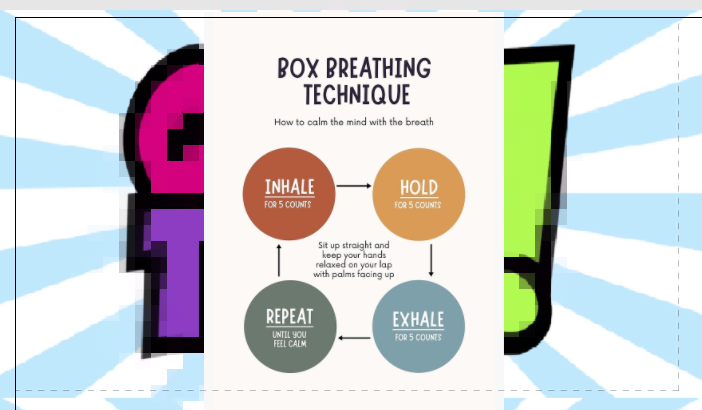
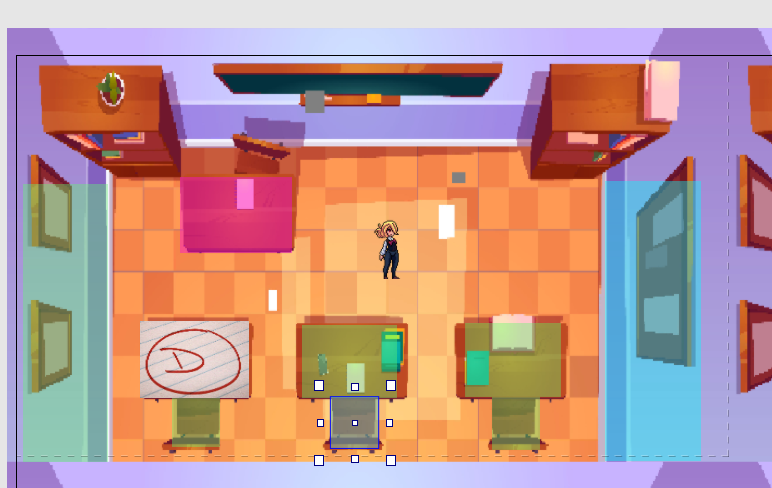
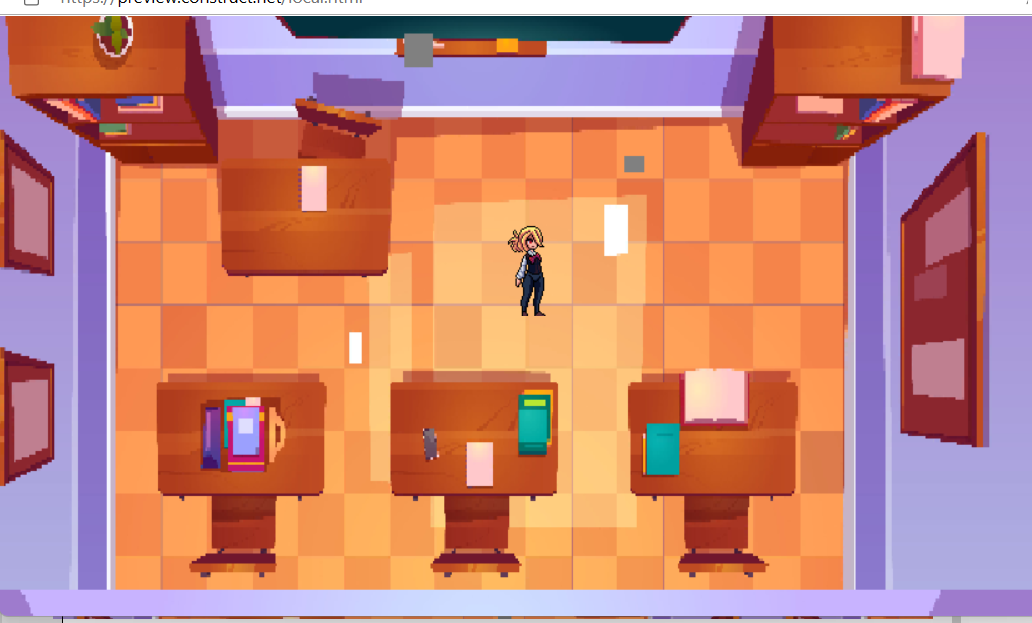
Peer responses
I did not receive any feedback on my post regarding my game design.
Comments
Post a Comment